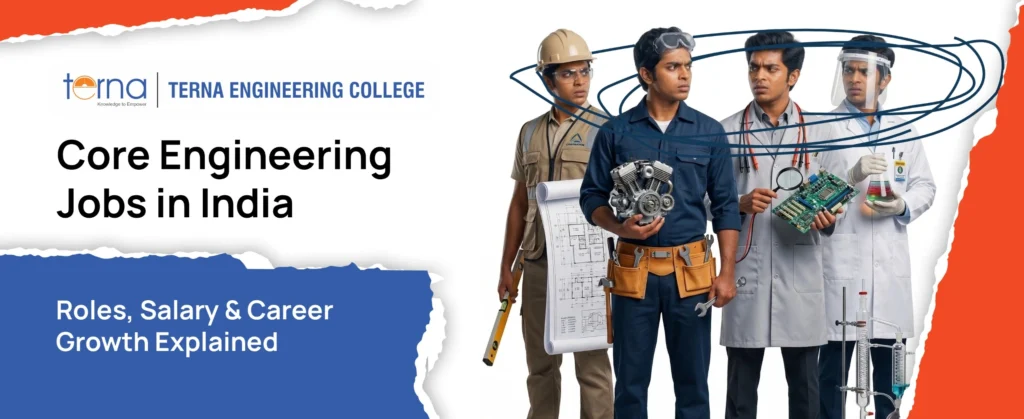
Engineering continues to be one of the most preferred career choices in India, especially in core engineering branches such as Mechanical Engineering, Civil Engineering, Electrical Engineering, and Chemical Engineering. These disciplines form the backbone of India’s industrial and infrastructure development, supporting sectors such as manufacturing, power generation, transportation, construction, and industrial automation.
Many students and graduates frequently search for information about core engineering job roles, salary trends in India, and long-term career growth opportunities. While engineering education provides a strong theoretical foundation, understanding real-world job roles and industry expectations is equally important for building a successful engineering career.
Core engineering careers offer opportunities in both government organizations and private industries, making them one of the most stable and respected professional paths in India. Engineers in these sectors contribute directly to building infrastructure, designing machines, improving production systems, and developing new technologies that support economic growth.
Understanding the available job roles, salary potential, and required skills can help students make better career decisions and prepare themselves for opportunities in the Indian engineering industry.
Table of Contents
ToggleMajor Core Engineering Job Roles in India
Graduates from core engineering branches can explore multiple professional roles depending on their specialization, industry demand, and technical skills. These roles involve designing engineering systems, managing infrastructure projects, improving manufacturing processes, and developing innovative technological solutions.
Some of the most common core engineering job roles in India include positions such as Design Engineer, Site Engineer, Production Engineer, Quality Engineer, and Research & Development Engineer. Each of these roles plays an essential part in industries like manufacturing, construction, automobile engineering, energy production, and infrastructure development.
These roles allow engineers to apply theoretical knowledge to real-world engineering challenges while contributing to large-scale industrial and technological projects across India.
Design Engineer
A Design Engineer is responsible for creating and developing engineering components, machines, and technical systems used in various industries. These professionals use advanced engineering design software such as AutoCAD, SolidWorks, CATIA, and Creo to develop accurate technical drawings and product models.
Design engineers play an important role in product development and innovation. Their work involves designing mechanical components, analyzing system performance, improving product efficiency, and collaborating with manufacturing teams to ensure that designs can be produced efficiently.
In India, design engineers are commonly employed in industries such as automobile manufacturing, industrial machinery production, aerospace engineering, and consumer product design. Companies in these sectors rely on skilled engineers to develop new technologies and improve existing engineering systems.
Site Engineer
A Site Engineer is primarily responsible for supervising engineering projects at construction or infrastructure sites. This role is especially common for graduates pursuing civil engineering career options in India.
Site engineers ensure that engineering plans and designs are implemented correctly during the construction process. They coordinate between project managers, architects, contractors, and workers to ensure that projects are completed according to technical specifications and safety standards.
Their responsibilities often include monitoring construction progress, managing materials and labor, inspecting project quality, and ensuring compliance with engineering regulations.
Site engineers play a critical role in major infrastructure projects such as bridges, highways, metro systems, residential buildings, industrial facilities, and smart city developments across India.
Production Engineer
A Production Engineer focuses on managing and improving manufacturing processes in industrial environments. Their main objective is to ensure efficient production while maintaining product quality and reducing operational costs.
Production engineers work closely with factory management teams to optimize production workflows, maintain machinery, and identify improvements in manufacturing systems.
These engineers are widely employed in industries such as automobile manufacturing, heavy machinery production, electronics manufacturing, consumer goods production, and industrial equipment manufacturing.
By improving efficiency and minimizing production delays, production engineers play a vital role in ensuring that companies meet their production targets and maintain competitive industrial performance.
Quality Engineer
A Quality Engineer is responsible for ensuring that products meet required engineering standards, safety regulations, and customer expectations. Their role is crucial in maintaining product reliability and industrial quality standards.
Quality engineers monitor production systems, conduct testing procedures, analyze product defects, and implement improvements to prevent quality issues.
They often work in industries such as automotive manufacturing, electronics production, construction materials, industrial machinery, and infrastructure development projects.
By maintaining strict quality control processes, quality engineers help organizations deliver safe and reliable engineering products while complying with industry regulations and standards.
Research and Development (R&D) Engineer
A Research and Development Engineer focuses on innovation and technological advancement within engineering organizations. These engineers work on developing new engineering solutions, improving existing technologies, and conducting experiments to enhance product performance.
R&D engineers contribute significantly to industries that rely on innovation and advanced technology development.
They are commonly employed in sectors such as automotive technology, renewable energy systems, aerospace engineering, industrial automation, robotics, and advanced manufacturing technologies.
Through research, experimentation, and technological development, R&D engineers play an essential role in driving engineering innovation and industrial progress.
Career Options for Mechanical, Civil, and Electrical Engineers in India
Different core engineering branches provide career opportunities across multiple industries.
Mechanical engineers often work in industries such as automobile manufacturing, heavy machinery production, thermal power plants, robotics, and industrial equipment design.
Civil engineers are mainly involved in infrastructure development projects, including highways, bridges, metro systems, residential construction, dams, airports, and smart city projects.
Electrical engineers play an important role in power generation companies, electrical equipment manufacturing, renewable energy systems, power distribution networks, and industrial automation technologies.
These branches remain highly important to India’s economic growth because they support essential sectors such as infrastructure, energy production, transportation systems, and manufacturing industries.
Salary Trends for Core Engineering Jobs in India
Salary levels in core engineering careers vary depending on factors such as experience level, industry demand, company size, and technical specialization.
Fresh engineering graduates in India typically start with salaries ranging between ₹3 LPA and ₹6 LPA, depending on the company and role.
Engineers with around 3 to 5 years of experience often earn between ₹6 LPA and ₹12 LPA, especially in private manufacturing and infrastructure companies.
Senior engineers with 8 to 10 years of experience may earn salaries ranging from ₹15 LPA to ₹30 LPA or more, particularly in large engineering firms, multinational companies, and government organizations.
Engineers working in PSU organizations and major infrastructure companies may also receive additional benefits such as housing allowances, medical benefits, job security, and retirement benefits.
Career Growth in Core Engineering Fields
Core engineering careers offer strong long-term growth opportunities for professionals who continuously improve their technical skills and industry knowledge.
Engineers usually begin their careers in entry-level technical roles and gradually move into higher positions as they gain experience.
A typical career progression path may include roles such as Junior Engineer, Design Engineer or Project Engineer, Senior Engineer, Engineering Manager, and eventually Technical Director or Engineering Consultant.
Many engineers also choose to pursue higher education such as M.Tech, MBA, or specialized engineering certifications to enhance their leadership and management opportunities in the industry.
Future Demand for Core Engineers in India
The demand for core engineering professionals in India is expected to remain strong due to rapid industrial expansion and infrastructure development across the country.
Several major factors are driving future demand for engineers, including smart city projects, renewable energy expansion, manufacturing sector growth, electric vehicle development, and industrial automation technologies.
Government initiatives such as Make in India, Digital India, and large-scale infrastructure investments are also expected to generate significant employment opportunities for engineers in the coming years.
As industries adopt advanced technologies and expand their operations, skilled engineers will continue to play a crucial role in supporting India’s technological and economic progress.
Frequently Asked Questions
Core engineering jobs are roles directly related to traditional engineering branches like mechanical, civil, electrical, and electronics, focusing on design, development, and infrastructure projects.
Freshers typically earn between ₹3–6 LPA, while mid-level professionals earn ₹6–12 LPA, and experienced engineers can earn ₹15–30 LPA or more depending on expertise and company.
Common roles include Junior Engineer, Design Engineer, Project Engineer, Site Engineer, and Engineering Manager, with growth into leadership positions over time.
Engineers usually progress from entry-level roles to senior positions and management roles, with options to specialize further or pursue higher education like M.Tech or MBA
Core engineering has strong future demand due to infrastructure development, renewable energy, smart cities, and industrial automation growth in India.