Engineering education in India has been evolving rapidly over the past decade. Traditional classroom learning is no longer sufficient for preparing students for modern engineering careers. Today, industries expect graduates to possess practical skills, technical expertise, and real-world problem-solving abilities.
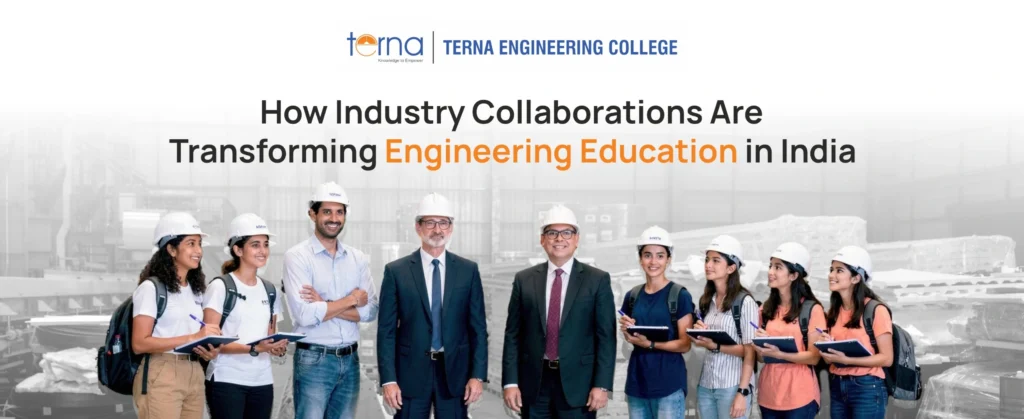
This is where industry collaboration in engineering education plays a crucial role. Many engineering institutions are partnering with technology companies, manufacturing firms, and infrastructure organizations to provide students with practical exposure during their academic journey.
Through these collaborations, students gain hands-on experience with modern engineering tools, industrial processes, and real-world engineering challenges. Institutions located near industrial regions such as Navi Mumbai, Maharashtra, India, often benefit significantly from these partnerships because they are closer to major companies and industrial hubs.
Industry collaboration is gradually transforming how BTech students learn, innovate, and prepare for professional careers.
Table of Contents
ToggleWhat is Industry Collaboration in Engineering Education?
Industry collaboration refers to partnerships between engineering institutions and companies that help bridge the gap between academic knowledge and industry requirements.
These partnerships allow students to gain exposure to real engineering environments while still studying in college.
Industry collaborations typically include:
- Internship programs with engineering companies
- Industrial training and practical workshops
- Joint research and innovation projects
- Industry expert lectures and mentoring sessions
- Collaborative laboratories sponsored by companies
Through these initiatives, students can understand how engineering concepts are applied in real industries such as manufacturing, construction, energy systems, and automation.
Benefits of Industry Collaboration for Engineering Students
One of the biggest advantages of industry collaboration is that it allows students to develop practical engineering skills.
Btech graduates who have industry exposure are often better prepared for professional roles.
Some key benefits include:
Practical Learning Experience
Students gain hands-on experience by working on real engineering projects, using industrial equipment, and learning how engineering systems operate in professional environments.
Improved Job Readiness
Companies often prefer hiring candidates who already have some level of industry exposure. Internships and industrial training help students understand workplace expectations and technical workflows.
Exposure to Emerging Technologies
Industry collaborations expose students to modern technologies such as automation systems, artificial intelligence, renewable energy systems, and smart infrastructure.
Professional Networking Opportunities
Students get opportunities to interact with experienced engineers, project managers, and industry professionals who can guide them in their career development.
Role of Industry Partnerships in Engineering Placements
Industry partnerships also play a major role in improving engineering placements.
Companies that collaborate with engineering institutions often recruit students directly from campus placement programs.
Engineering colleges located near major industrial regions such as Navi Mumbai, Maharashtra, India may have stronger industry connections because several manufacturing plants, technology companies, and infrastructure firms operate in that region.
Students who gain experience through internships and collaborative projects often have better chances of receiving job offers from these organizations.
Emerging Trends in Industry-Academia Collaboration
Several new trends are shaping the future of engineering education in India.
Industry-Sponsored Laboratories
Many technology companies are sponsoring advanced laboratories within engineering institutions to train students on industry-grade equipment.
Live Industry Projects
Students are increasingly working on real industry problems as part of their academic projects.
Innovation and Startup Incubation
Many engineering institutions now support innovation labs and startup incubators at Terna Engineering College, Navi Mumbai, where students can develop technology-based business ideas.
Skill Development Programs
Companies often organize specialized training programs to help students develop technical skills required by industries.
Future of Industry Collaboration in Engineering Education
The future of engineering education will likely involve even stronger partnerships between academia and industry.
Government initiatives such as Skill India, Make in India, and Digital India are encouraging institutions to work closely with industries to prepare students for emerging technological sectors.
Fields such as renewable energy, electric vehicles, smart infrastructure, and industrial automation will require engineers who possess both theoretical knowledge and practical skills.
Students studying in Btech institutions across India and Maharashtra, especially near industrial hubs like Navi Mumbai, may benefit significantly from these developments.
Industry collaboration is therefore expected to become an essential component of engineering education in the coming years.
Frequently Asked Questions
Industry collaboration is a partnership between colleges and companies that provides students with real-world training, internships, and practical exposure.
It helps students gain practical skills, improves job readiness, and increases placement opportunities.
Yes, many engineering colleges in Navi Mumbai offer internships, industrial visits, and training programs through partnerships with companies.
Internships provide hands-on experience, exposure to real projects, and improve employability.